Specification & QA
Qualified Polyurea Inspector
For the people who sign off on the work. Acceptance criteria, moisture and profile testing, ambient limits, wet and dry film measurement, adhesion testing and a coating log that stands up when something goes wrong.
- Format
- Classroom and hands-on testing
- Where
- ArmorThane training facility, or on site
- Level
- Intermediate — technical background assumed
- Who it is for
- Owners’ representatives, engineers, general contractors, facility and municipal inspectors, and applicators who want to run their own QA.
- Dates & pricing
- Classes run through the year. Ask for the current schedule and we will send dates and a figure — or call (417) 831-5090.
The short version
A coating fails long before anyone can see it fail. An inspector who knows what to measure, when to measure it and how to record it is the cheapest insurance on the whole job.
Polyurea hides its own problems. It bridges, it skins over, and it looks perfect over a substrate that was never going to hold it. By the time a blister appears, the evidence of what went wrong is sealed under the film.
This track teaches you to catch the job while it can still be fixed: what to accept, what to reject, what to write down, and what a defensible coating record actually looks like when a dispute lands two years later.
What you will be able to do
- Set and defend substrate acceptance criteria before any material is opened.
- Test concrete moisture and apply the below-5% limit with confidence.
- Assess and specify surface profile, and recognise a profile that was not achieved.
- Calculate dew point and hold the surface-temperature margin above it.
- Measure wet film and dry film thickness and know when each reading is meaningful.
- Run holiday and spark testing on a lining where pinholes matter.
- Perform and interpret an adhesion pull-off test.
- Keep a coating log that survives scrutiny — conditions, batches, readings, photographs.
- Read a failure and work backwards to its real cause rather than the obvious one.
What is included
- Hands-on practice with moisture meters, gauges and pull-off testers
- Worked failure case studies
- Inspection forms and coating-log templates
- Your certificate on completion
- Ongoing access to the technical support line
Core curriculum
The eight modules, as they run in this track.
Every program covers all eight. The depth and the substrates change to match the work you are training for.
Polyurea is the reaction of an isocyanate with an amine-terminated resin. It is fast, it is moisture-tolerant during cure in a way polyurethane is not, and it builds film in a single pass. Understanding the chemistry is not academic: it is what tells you why the material gels in seconds, why heat and pressure matter so much, why a hybrid behaves differently from a pure system, and why some jobs want one and not the other. We trace the material from its industrial origins to where it sits today across containment, infrastructure, truck beds, roofing and water.
- Pure polyurea, polyurethane and hybrid systems compared
- Why gel time drives everything about technique
- Where each chemistry belongs — and where it does not
- Reading a technical data sheet properly
Plural-component material has to arrive at the mixing chamber hot enough, at pressure, and at the correct ratio. Get any one of those wrong and the film will look acceptable and perform badly. This module covers conditioning and handling material before it goes in the machine, setting primary heaters and hose heat, balancing A and B pressures, and recognising on the panel — not in a lab three weeks later — that a system has drifted off ratio.
- Material conditioning, storage and drum handling
- Setting heat and pressure to the data sheet
- Ratio verification and what off-ratio looks like
- Viscosity, ambient temperature and their effect on processing
Plural-component spraying carries real hazards: isocyanate exposure and sensitisation, high-pressure fluid injection injuries, solvent flash, and work in confined or poorly ventilated spaces. We cover selecting and fitting respiratory protection, skin and eye protection, ventilation and containment, safe handling and spill response, and the discipline of never putting a hand near a gun tip under pressure. Safety is taught first because it is the part of the job where one lapse ends a career.
- Isocyanate exposure, sensitisation and medical monitoring
- Respirator selection, fit and supplied-air systems
- Ventilation, containment and confined-space work
- High-pressure injection injury — prevention and response
Every substrate brings its own failure mode. Concrete carries moisture and laitance; steel carries mill scale and flash rust; wood moves; foam needs a compatible system; an existing coating may or may not be something you can bond to. This module teaches identification and testing — moisture, soundness, contamination, pH, adhesion of what is already there — so that the decision to coat or to walk away is made on evidence rather than optimism.
- Concrete moisture testing and the below-5% limit
- Steel condition, mill scale and flash rust
- Testing adhesion of an existing coating before overcoating
- Contamination: oil, salts, curing compounds and silicones
Adhesion is bought at the preparation stage and nowhere else. We work through mechanical preparation — shot blast, grinding, scarifying, abrasive blast — and what profile each one produces, plus cleaning, dust removal, edge and crack detailing, termination details, and priming. You will prepare substrates by hand and then test what you prepared, which is the only way the lesson actually lands.
- Choosing a preparation method to hit the specified profile
- Edges, cracks, joints and terminations
- When to prime, and what primer the system calls for
- Verifying preparation instead of assuming it
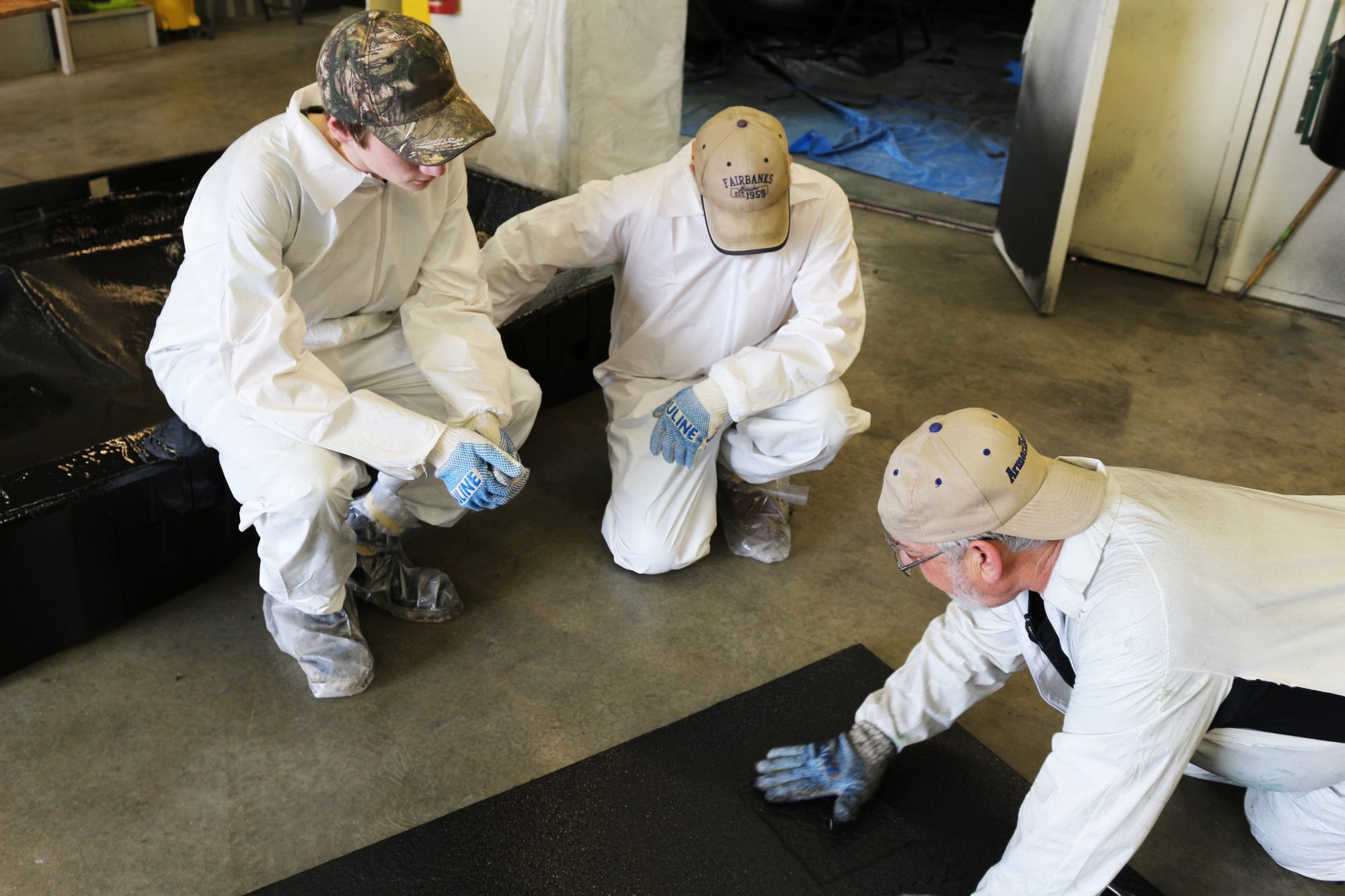
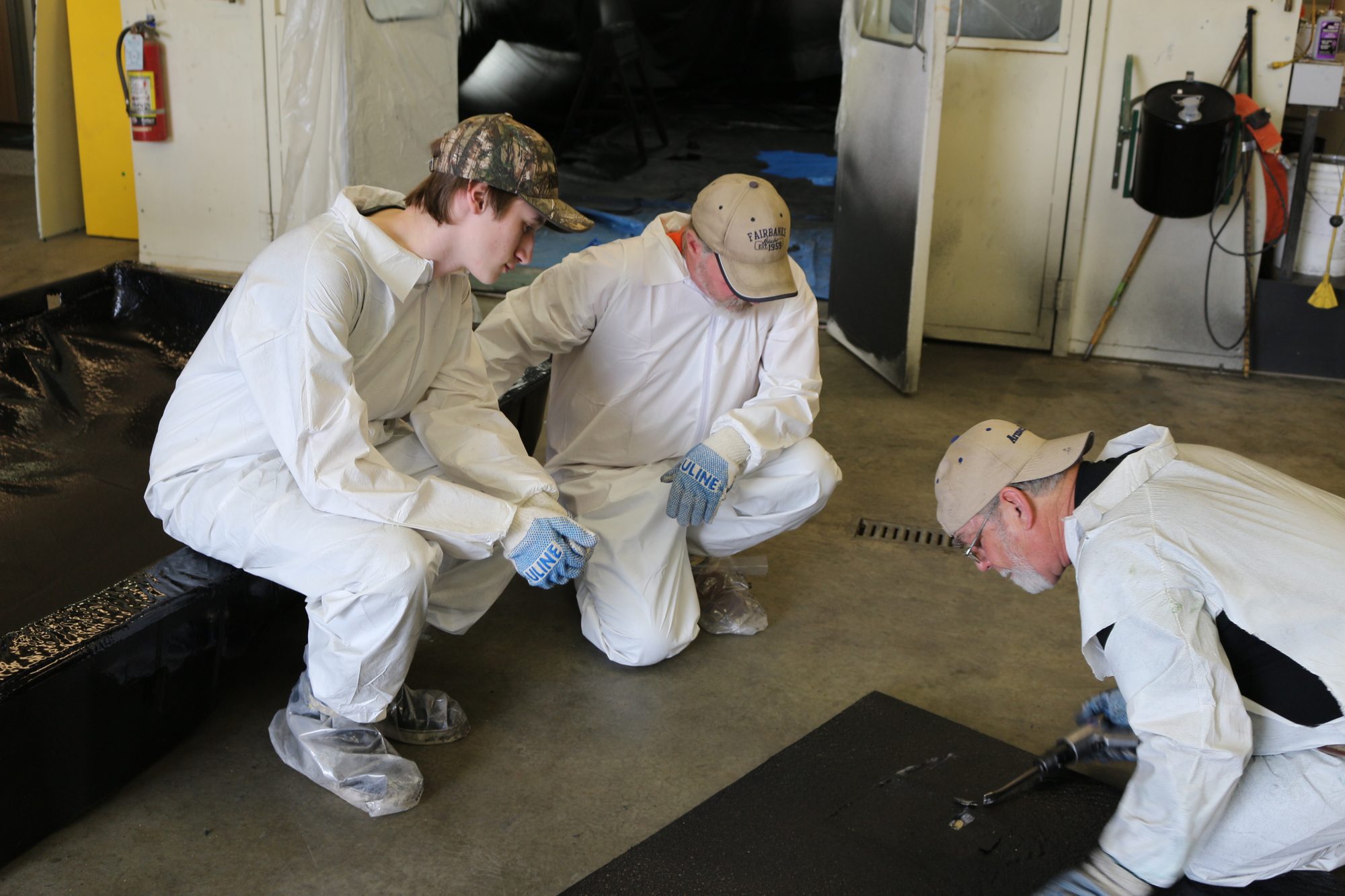
This is the part that only comes from spraying. Correct standoff and angle, consistent travel speed, a disciplined overlap, how to handle inside corners and vertical surfaces, how to keep film build even across a large area, and how to recover when something goes wrong mid-pass. You spray, the instructor critiques, you spray again. Then you cut the panel and look at what you actually built.
- Standoff, angle, travel speed and overlap
- Vertical surfaces, corners and detail work
- Maintaining consistent film build over area
- Recognising dry spray, runs and sags as they happen
A coating that has not been measured is a coating nobody can defend. We cover wet film gauges and when the reading is useful, dry film measurement on different substrates, pull-off adhesion testing, holiday and spark testing on linings where a pinhole is a failure, and keeping a record of conditions and readings as the job proceeds. The habit of documenting is as valuable as the testing itself.
- Wet film and dry film measurement in practice
- Pull-off adhesion testing and interpreting the break
- Holiday and spark testing for linings and containment
- Building a coating log that holds up later
Downtime is the quiet cost of this business. We cover daily start-up and shutdown, flushing and lubrication, filters and screens, gun teardown and rebuild, mixing-chamber and impingement issues, seal and o-ring replacement, heated hose and temperature faults, pressure imbalance, and the routine maintenance schedule that prevents most of it. You will take a gun apart and put it back together until it is boring.
- Daily start-up, shutdown and flush routines
- Gun teardown, cleaning and rebuild
- Pressure imbalance and heater faults
- A maintenance schedule a crew will actually follow
Questions
Before you book.
No, but you should be comfortable on a job site and with basic measurement. Several of the best inspectors we have trained came from engineering or facilities rather than from spraying.
The measurement, acceptance and documentation practice is general to sprayed polyurea and polyurethane. Where a figure is product-specific we say so and show you where to find it on the data sheet.
More answers on the questions page.
Other programs
Also worth a look.
Polyurea Applicator Certification
Everything a working applicator needs, in one hands-on program.
Explore the program
Spray-On Bedliner Certification
Turn a bay into a same-day profit centre.
Explore the program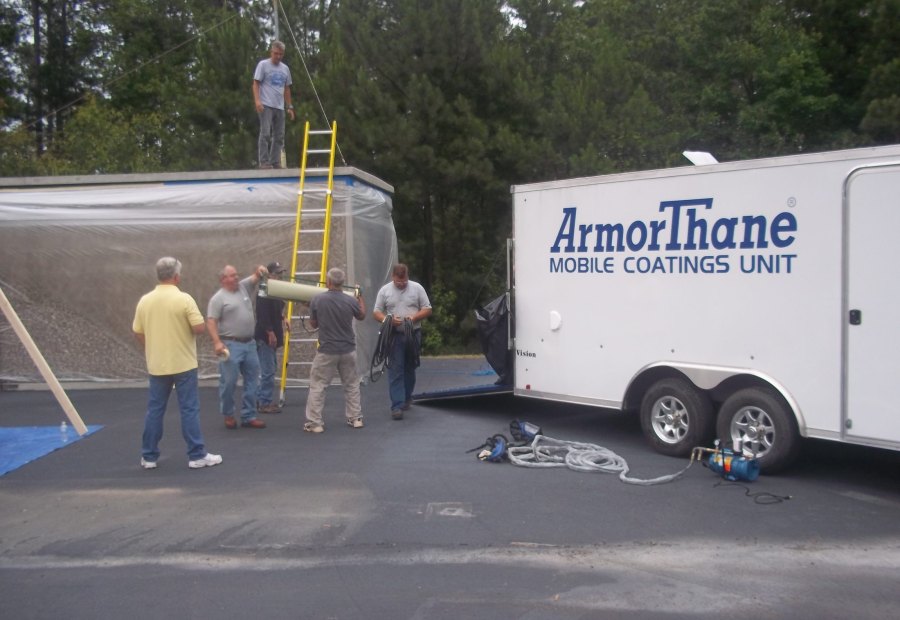
On-Site & Mobile Unit Training
The whole crew, on your own equipment.
Explore the program