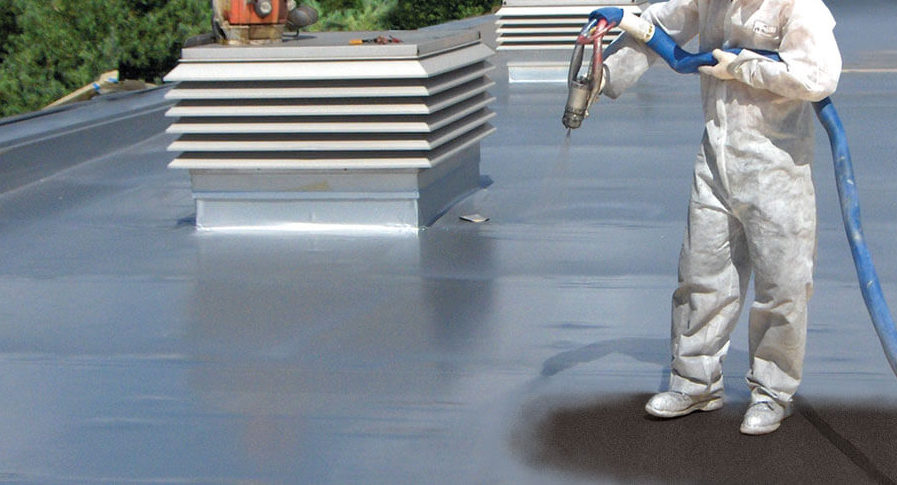

Key Takeaways
- Polyurea hunting blind training teaches spray technique, equipment setup, surface prep, and texture control
- Polyurea cures in seconds, making it ideal for production shops building multiple blinds
- A quality applicator training program typically runs 2–4 days with hands-on spray time
- The interior coating texture directly affects how much light a hunting blind absorbs — polyurea lets you dial this in precisely
- PPE, ventilation, and substrate temperature management are non-negotiable skills for safe polyurea application
Polyurea hunting blind training is one of the most valuable skills a custom blind builder can add to their operation. If you’ve spent any time building hunting blinds — whether that’s permanent wooden box blinds, portable ground blinds, or elevated shooting houses — you already know the build itself is only half the battle. What you coat that blind with after the fact has a bigger impact on how it performs in the field than most builders ever stop to think about. Hunters notice things. They notice when a plywood interior catches a glint of morning light. They notice when a fresh coat of paint still smells like solvent three weeks after opening day. And they definitely notice when the exterior of their blind starts peeling after one hard winter.
Over the last several years, polyurea spray coatings have quietly become one of the most useful tools available to hunting blind builders who want to offer a genuinely premium product. The problem is that most builders who’ve heard of polyurea don’t know how to apply it correctly — and a bad application is almost worse than no coating at all. That’s where proper training makes all the difference.
This guide is written specifically for hunting blind builders who want to add polyurea spray application to their skill set, either to improve their own product or to offer coating services professionally. We’ll cover what polyurea actually is, why it works so well for hunting blinds, what the training process looks like, and what you need to know before you ever pull a trigger on a spray gun.
Why Polyurea Works So Well on Hunting Blinds
Before you can train someone to spray polyurea on a hunting blind, it helps to understand why polyurea is worth using in the first place. There are a lot of coatings out there — epoxies, polyurethanes, elastomeric paints, rubberized coatings — and each one has its own set of tradeoffs. Polyurea sits in a category of its own for a few specific reasons.
First, cure time. Polyurea cures in seconds, not hours. A properly heated and mixed two-component system will go from liquid to touch-dry in under a minute. For a production shop building multiple blinds at a time, that’s a game-changer. You spray, it cures, and you can move on. You’re not waiting around for a coating to dry before you can flip the panel and do the other side.
Second, the physical properties are hard to match. A fully cured polyurea coating is flexible, impact-resistant, and will stretch and move with the substrate rather than cracking. For hunting blinds that spend their lives outdoors through freeze-thaw cycles, this matters a lot. Wood expands and contracts. A brittle coating cracks. Polyurea moves with the wood rather than against it.
Third — and this is the part hunters care about most — you can dial in the finish texture. A properly sprayed polyurea interior coat can be applied with a matte, light-absorbing texture that kills reflections inside the blind. That’s not something you can achieve with standard spray paint, no matter how flat the sheen. The reason this matters so much is explained in detail over at why the coating inside your hunting blind matters more than you think — it’s worth a read before you start coating blinds for customers.
| Coating Type | Cure Time | Flexibility | Matte Finish | Best For Blinds |
|---|---|---|---|---|
| Polyurea | Seconds | Excellent | Excellent | ✅ Yes |
| Polyurethane | Minutes–Hours | Good | Good | Partial |
| Epoxy | Hours | Poor | Fair | ❌ No |
| Flat Spray Paint | Minutes | Poor | Fair | ❌ No |
What Makes Polyurea Spray Training Different from Other Coating Training
Polyurea is not forgiving of sloppy technique. That’s the first thing anyone serious about this material needs to understand. You can get away with a lot when you’re rolling on epoxy or brushing out a latex coating. Polyurea does not allow for that kind of loose approach.
The material comes in two components — an isocyanate side and a resin side — that have to be heated separately to the correct temperatures, mixed at the gun head at the correct ratio, and sprayed within a precise range of spray distance and pass speed. Get any one of those variables wrong and you end up with a coating that doesn’t cure properly, has fisheye, fails adhesion, or has a surface that looks and feels nothing like what it should.
This is why spray foam and polyurea equipment operators are trained specifically, not just handed a machine and told to figure it out. The equipment itself — typically a proportioner with heated hoses and an impingement-mix spray gun — has to be understood before the chemistry can be managed. You have to know how temperature changes affect viscosity, how pressure differential affects mix ratio, and how to read the spray pattern to know whether something is off before it shows up as a coating defect.
For hunting blind builders who come from a woodworking or metal fabrication background, this is a genuine learning curve. The coating process is less like painting and more like operating a precision manufacturing system. The good news is that once you’ve run through a proper structured training program, the mechanics become repeatable. Good training programs teach you the variables, show you how to control them, and then put you behind a gun with enough supervised trigger time to make the process feel natural.
Core Topics Covered in Polyurea Applicator Training
A solid polyurea hunting blind training program for applicators should cover the following areas. If the training you’re looking at skips any of these, ask why — because each one affects the quality of the finished coating.
Surface Preparation
Adhesion starts at the surface. For wood substrates — which is what most hunting blind builders are working with — that means clean, dry wood with no mill glaze, contamination, or loose fibers. A light sand and a wipe-down sounds simple, but trainees need to understand exactly what they’re trying to achieve with surface prep and why shortcuts at this stage show up as adhesion failures months later. For metal components on a blind frame, prep requirements are different and include removing rust, scale, and any oil contamination from fabrication.
Primer Selection and Application
Some polyurea systems spray directly over prepared substrates without a primer. Others — particularly when coating porous wood — benefit significantly from a tie coat or primer to lock down the surface and prevent off-gassing from affecting the polyurea as it cures. Understanding when a primer is needed, which primer is compatible with the polyurea system being used, and how to apply it correctly is a foundational skill for any applicator working on hunting blinds.
Equipment Setup and Calibration
This is where a lot of new applicators run into trouble. A proportioner has to be set up correctly before you pull the trigger — correct temperatures for both A and B sides, correct pressure settings, correct fluid and air tip selection for the gun, and correct hose lengths for the job at hand. A training program should walk applicators through the startup sequence step by step, explain what each adjustment does, and teach trainees how to troubleshoot common setup issues before they turn into wasted material and ruined panels.
Spray Technique
Pass speed, spray distance, overlap percentage, and angle — these four variables determine what the coating looks like and how it performs. Training should include hands-on time spraying test panels under supervision, with immediate feedback on what the trainee is doing right and what needs adjustment. Most applicators need several hours of supervised spray time before their technique becomes consistent enough to produce sellable results on actual hunting blind components.
Texture Control
For hunting blinds specifically, texture control is the skill that separates good applicators from great ones. A slightly more aggressive spray pattern creates a coarser texture that absorbs light more effectively — which is exactly what you want on the interior of a hunting blind. Training should cover how to intentionally vary texture by adjusting temperature, pressure, and tip selection, and how to reproduce a target texture consistently across multiple panels or multiple jobs.
Cleanup, Maintenance, and Equipment Care
Polyurea equipment that isn’t maintained properly fails at the worst possible moments. Training should include a full equipment teardown and cleaning sequence, an explanation of what happens when material is left in the gun or hoses, and a maintenance schedule that keeps equipment running reliably. For hunting blind builders running a small shop, equipment downtime is a real cost, and proper maintenance habits established during training pay off quickly.
Setting Up Your Shop for Polyurea Application
Adding polyurea spray capability to a hunting blind build operation requires more than just buying a machine. The workspace matters. Polyurea generates overspray and some off-gassing during application, which means proper ventilation isn’t optional — it’s a requirement for both safety and coating quality. A spray booth or at minimum a designated spray area with exhaust fans, proper lighting, and temperature control gives you the kind of consistent environment that leads to consistent coatings.
Temperature is a bigger factor in polyurea application than most new applicators realize. The material is temperature-sensitive in two ways — a topic covered in depth in our guide to how moisture impacts polyurea application — the ambient temperature in the spray area affects how the coating behaves after it leaves the gun, and the substrate temperature affects how the coating bonds and cures. Trying to spray polyurea on a cold wooden panel in an unheated shop in January will not go well. Training programs that teach applicators to monitor and manage both ambient and substrate temperatures set people up for success in real-world production environments.
Personal protective equipment is also a non-negotiable part of any polyurea spray operation. Full respiratory protection — not just a dust mask — is required. Eye protection, chemical-resistant gloves, and coveralls are standard. Isocyanate sensitization is a real risk with repeated unprotected exposure, and once someone is sensitized, they may not be able to work with polyurea materials at all. Good training programs treat PPE as a core skill, not an afterthought.
Choosing the Right Polyurea System for Hunting Blinds
Not all polyurea systems are the same, and the choice of system matters for hunting blind applications. Pure polyurea systems cure extremely fast and offer excellent elongation and tensile strength, but they can be sensitive to moisture during application and require more precise temperature management. Polyurea-polyurethane hybrid systems are more forgiving of application conditions and often offer better adhesion on wood substrates without a primer, at some cost to cure speed and physical properties.
For most hunting blind builders getting started with polyurea spray application, a hybrid system with a proven track record on wood is usually the better starting point. The learning curve on equipment and technique is steep enough without adding the additional demands of a pure polyurea system. As applicators build experience and refine their process, moving to a pure system for applications where maximum performance is required becomes a natural progression.
Color and sheen level are also part of system selection. Most hunting blind builders want a flat black or earth-tone interior, and some systems can be pigmented easily while others require custom batching. Exterior coatings might benefit from UV stabilizers added to the formulation to prevent chalking and color shift from sun exposure. These details are worth discussing with your material supplier before training, so that the system you train on is the system you’ll actually be using in production.
Common Mistakes Hunting Blind Builders Make When Learning Polyurea
Having trained and worked alongside applicators across a range of backgrounds, the same mistakes come up again and again when someone is new to polyurea spray on hunting blinds. Knowing them ahead of time doesn’t eliminate them — hands-on experience does that — but going in with eyes open helps trainees recognize what’s happening when something goes wrong.
Skipping or rushing surface prep is the most common one. It’s easy to think that a fast-curing, tough coating will bond to just about anything, and polyurea does have better adhesion than many coatings. But adhesion failures on poorly prepped wood still happen, and they always happen at the worst possible time — not during testing, but on a job where the blind is already assembled and the customer is waiting.
Underheating the material is another common issue. New applicators sometimes run the machine colder than the recommended setpoint because they’re worried about scorching the material. In reality, polyurea that isn’t at the right temperature doesn’t mix properly at the gun head, which leads to incomplete cure, poor adhesion, and a coating that might look fine when it comes off the gun but will fail under use. Trust the temperature setpoints that come from the material supplier and the training, and verify them with a contact thermometer on the hoses and gun until you develop a feel for what correct looks like.
Moving too slowly is something a lot of applicators coming from brush or roll application do instinctively. With a brush, slow and careful is usually better. With a polyurea spray gun, moving too slowly builds up excessive film thickness in a pass, which can trap heat during cure and create surface imperfections. Pass speed needs to be deliberate and controlled, but it also needs to match the output rate of the gun at the settings being used.
The Business Case for Offering Polyurea-Coated Hunting Blinds
From a pure business standpoint, adding polyurea coating to hunting blind builds is one of the cleaner upsells available to a builder. The material cost per blind, once you’re running an efficient operation, is reasonable. The perceived value to a customer — a durable, professional, matte-finish coating that outperforms anything they could do themselves — is high. And the differentiation from competitors who are still rolling on flat black latex paint is significant.
Hunting blind customers who are serious about the product they’re buying have started to ask about coatings. They read forums and watch YouTube. They know what polyurea is and they associate it with quality. A builder who can say “we spray all our blinds with a two-component polyurea system” is talking a different language than a builder whose answer is “we use exterior flat paint.” The coating becomes part of the sales conversation, not just a line item on a spec sheet.
There’s also an argument for offering coating as a standalone service — a concept explored in more depth in our article on unique polyurea business models — taking in blinds that other people have built and coating them to customer spec. The equipment investment is significant, but once it’s in place and you have trained operators running it efficiently, the incremental cost of each job is mostly material and labor. A small shop that runs two or three coating days a week can offset equipment costs relatively quickly on a mix of their own blind builds and third-party work.
Finding the Right Polyurea Training for Your Operation
Not all polyurea training programs are built the same. Some are manufacturer-specific and oriented toward selling you their particular system. Others are genuinely equipment- and material-agnostic, focused on teaching you the principles so you can work intelligently with whatever system you end up using. For a hunting blind builder who’s new to spray coatings entirely, a broader training foundation is usually more valuable than a narrow manufacturer program — you want to understand the why behind every step, not just memorize a sequence.
Look for programs that include hands-on spray time, not just classroom or video instruction. Polyurea is a tactile skill. You can watch someone spray perfect test panels for hours and still be surprised by how different it feels when you’re behind the gun. Hands-on supervised practice, with a trainer who can watch your technique and tell you what to adjust in real time, is the core of any training program worth paying for.
Also look at what happens after the training ends. Good programs offer follow-up support — someone you can call when your first production run produces unexpected results and you need to troubleshoot. The first few weeks after training are when most new applicators run into real-world variables that weren’t covered in the classroom, and having access to someone with experience during that period is genuinely valuable. To see what a structured polyurea training curriculum looks like and what topics are typically covered for applicators across industries, Coatings Academy polyurea training courses provide a good benchmark for what quality instruction in this space looks like.
Getting Started: A Realistic Timeline
For a hunting blind builder starting from scratch with no prior spray coating experience, here is a realistic picture of what the path to confident polyurea application looks like.
Training itself — assuming a quality program with classroom and hands-on components — typically runs two to four days. That’s enough time to understand the material, learn equipment operation and setup, practice spray technique on test panels, and get comfortable with the cleanup and maintenance routine. Two to four days is not enough time to be a fully polished applicator, but it is enough to get started safely and productively.
After training, most new applicators need several weeks of production spraying before their technique becomes truly consistent. During this period, keep jobs simple — flat panels, basic geometries, controlled conditions. As your feel for the material develops, more complex work becomes manageable. Corners, seams, irregular surfaces, and vertical spraying all come with their own technique requirements that build on the fundamentals established in training.
Equipment setup and workspace preparation typically take a few weeks and a significant capital investment before the first day of production. The proportioner, heated hoses, spray gun, and supporting equipment represent the largest cost barrier to entry. Understanding your volume projections before you buy equipment determines whether a production-grade proportioner makes financial sense or whether starting with a lower-output system while you build your customer base is the smarter move.
The end result, if you put in the work, is a hunting blind product that stands apart from everything else in your market. A well-applied polyurea coating on a hunting blind is something that gets noticed — by the hunter who bought it, by their hunting partners, and by everyone who hears the story about how that blind held up through a brutal spring storm and came out looking exactly the same as when it went in.